Taste
She can feel the difference between restraint and emptiness, between design and decoration.


01 / Private first look
A commercial briefing on the story, woman, product standard, visual world, and campaign opening now forming around the brand.
02 / The thesis
This is the commercial spine. The Sanct is not asking the woman to become more acceptable. It is asking the garment to become more responsible.
03 / The market problem
The market is full of garments that look desirable on the rail and become labour on the body. She adjusts, covers, pins, pulls, layers, simplifies, or chooses something safer than her taste.
The problem is not that she needs more reassurance. The problem is that too many garments still require the woman to compensate for the design.
04 / The woman
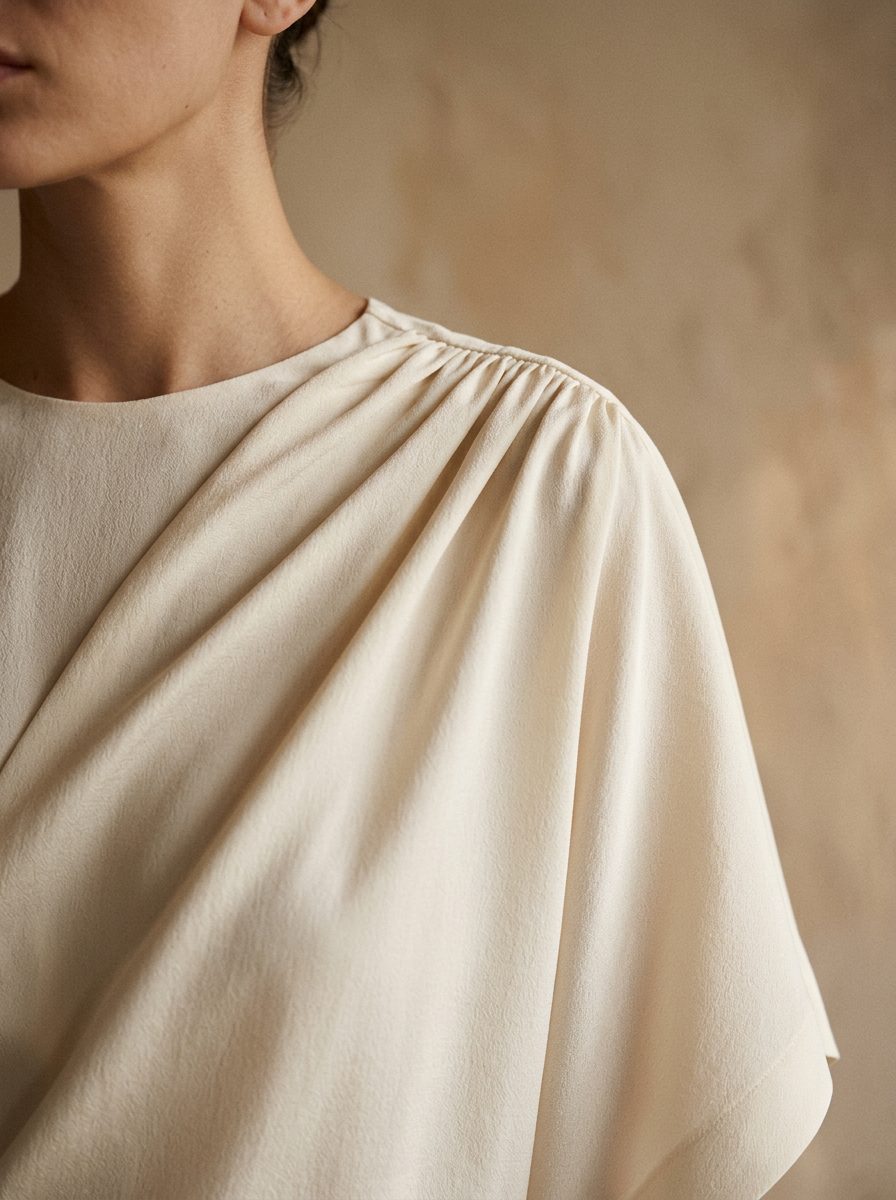
She is defined by taste, standards, quality expectation, aesthetic intelligence, and a serious relationship with fashion. She notices proportion. She understands fabric. She knows when a garment has been thought through.
She is not defined by age, body shape, validation seeking, or a category label. She is not waiting to be invited into fashion. She is looking for clothing with enough design, intelligence, ease, and feeling to meet her where she already is.
She can feel the difference between restraint and emptiness, between design and decoration.

She would rather own fewer pieces that are right than many pieces that ask her to compromise.
She still wants presence, colour, movement, architecture, and desire from her clothes.
She is tired of managing clothing that should have carried more of the responsibility.


05 / The unmet need
The commercial tension is sharp because the desire has not gone away. She does not want less fashion. She wants fashion that does not make her hold, hide, shrink, or simplify herself to participate.
The opening is not a rescue story. It is a recognition story: the woman was never the problem.
06 / The Sanct answer
The Sanct can speak from the standard the product has to meet: fit geometry, drape logic, fabric behaviour, movement, and proportion.
The garment should feel like sanctuary on the body: light enough to forget, protective enough to feel safe, expressive enough to show herself, and directional enough not to become basic.
07 / Why it is different
The difference is not that The Sanct makes clothing softer. The difference is that it intends to make fashion-level design behave responsibly on the body.
Comfort is not the opposite of fashion. Ease should still carry visual presence.
The copy should not flatter insecurity or turn the customer into a before-and-after story.
The garment needs design content: volume, release, proportion, and visible decision.
The world is warm, directional, cultural, textural, adult, and alive.
08 / The product standard
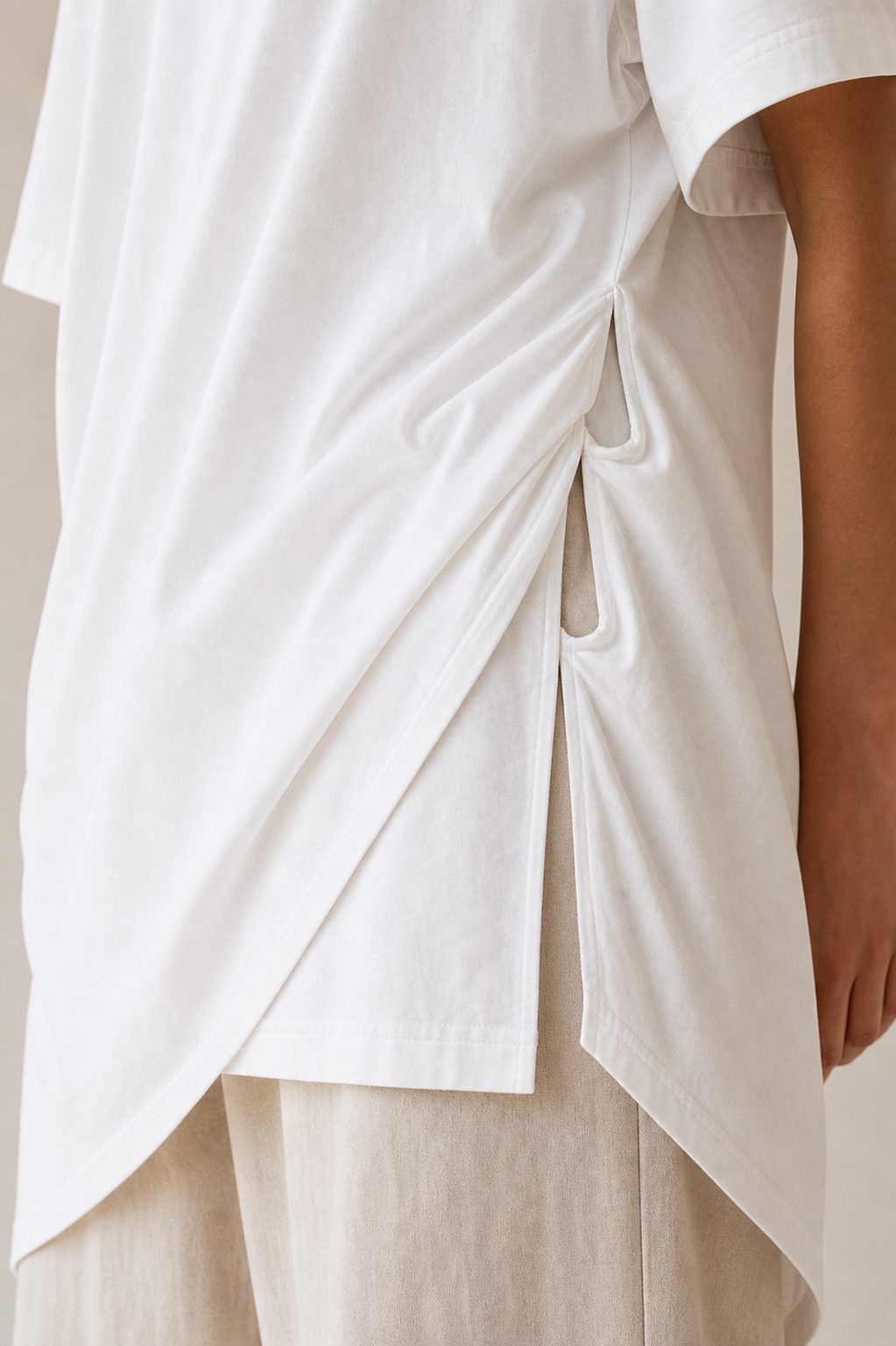
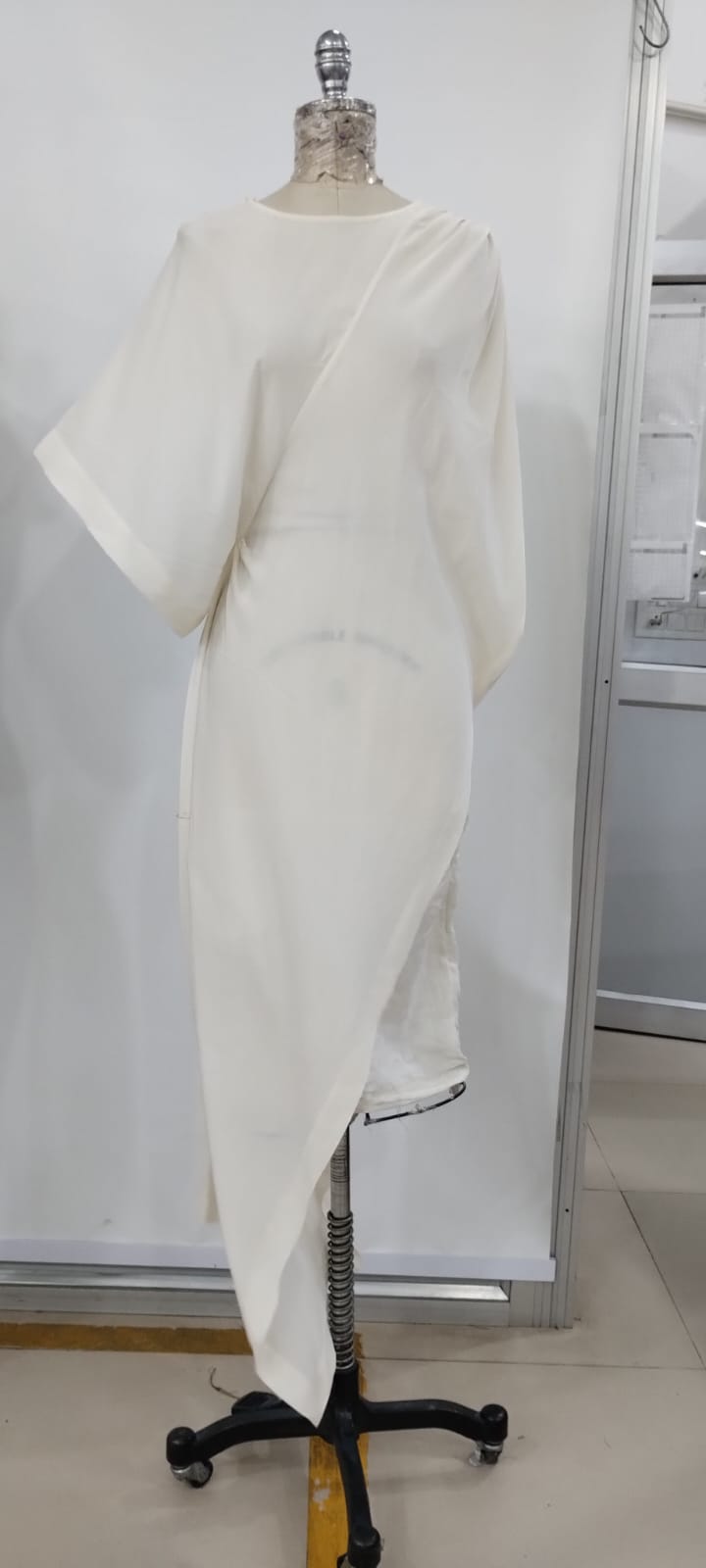
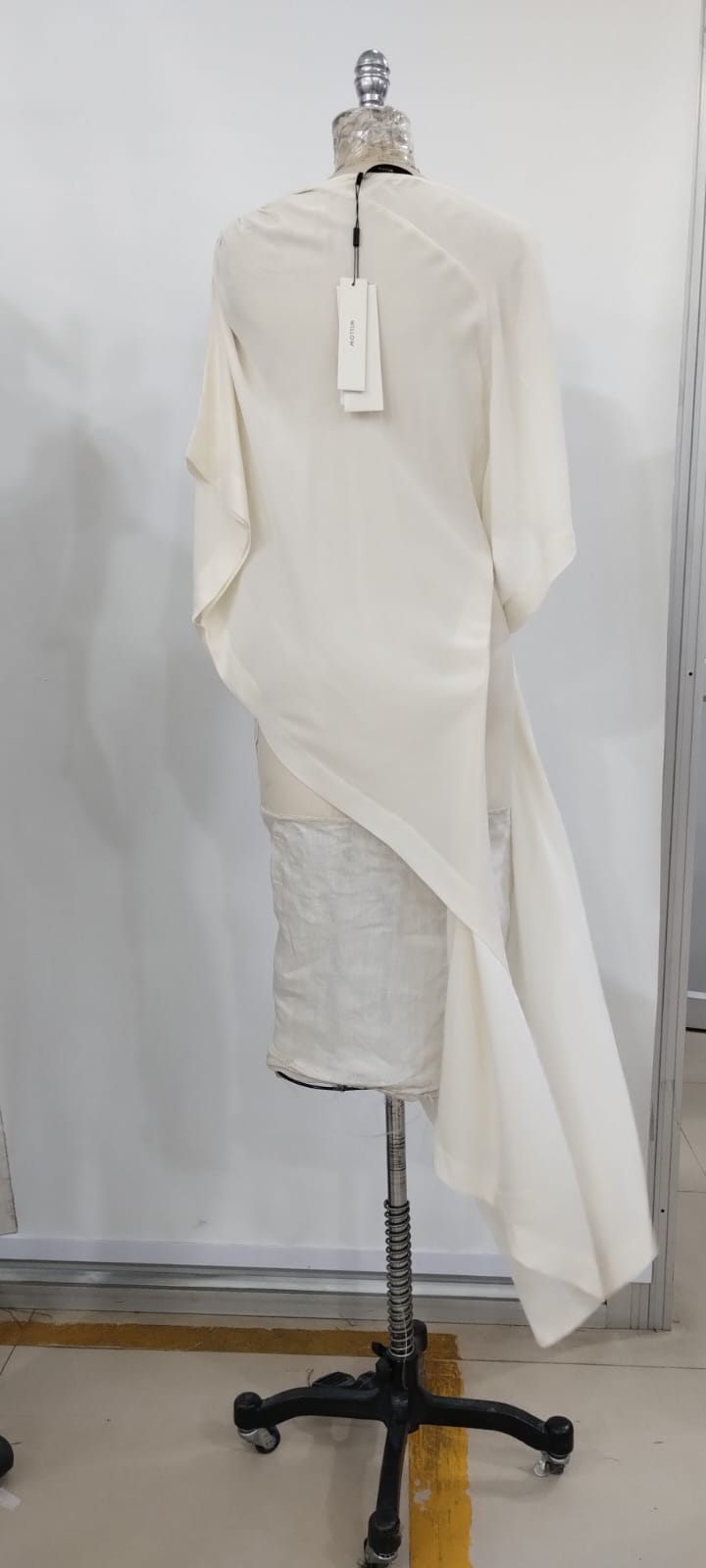
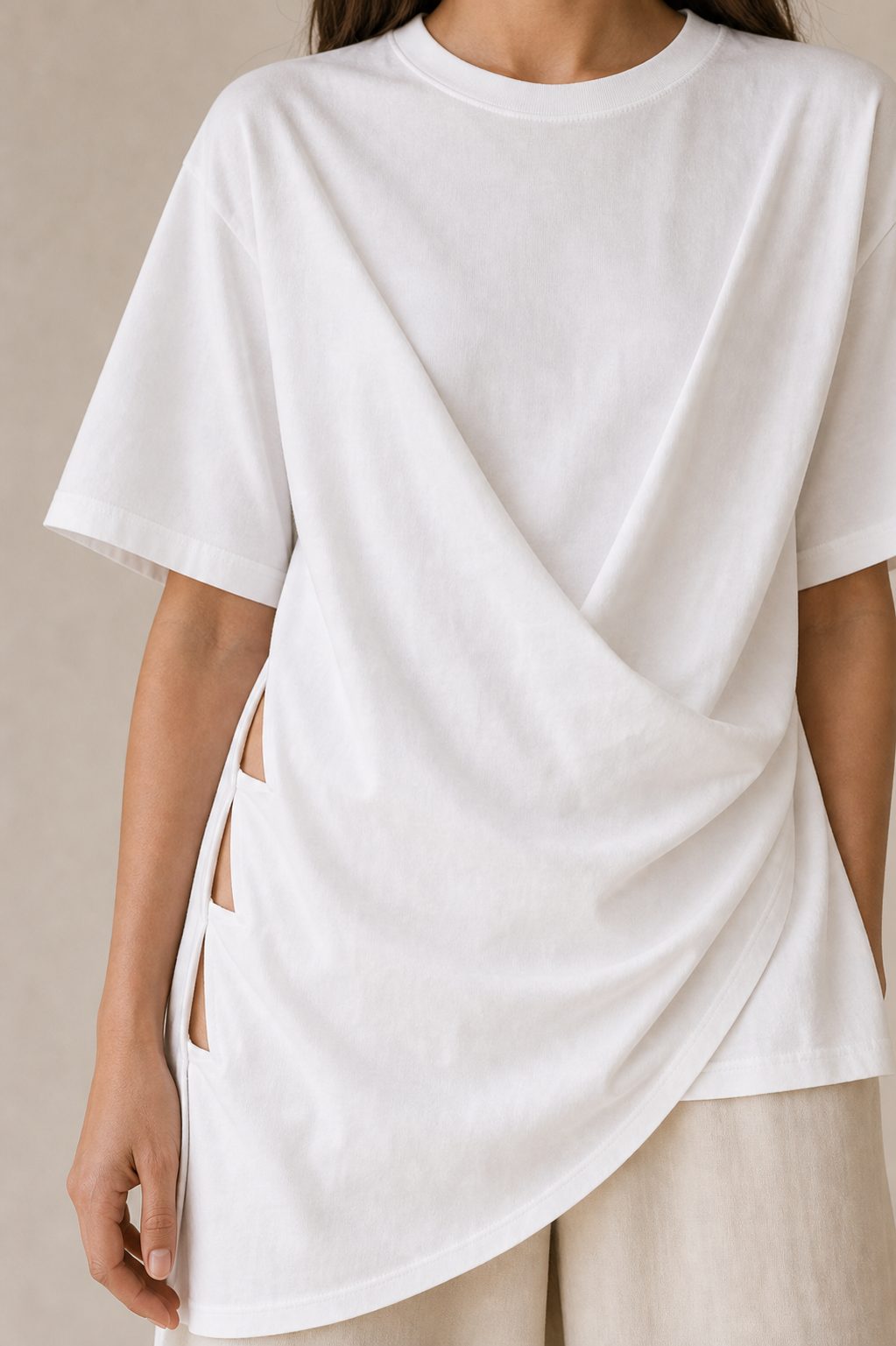
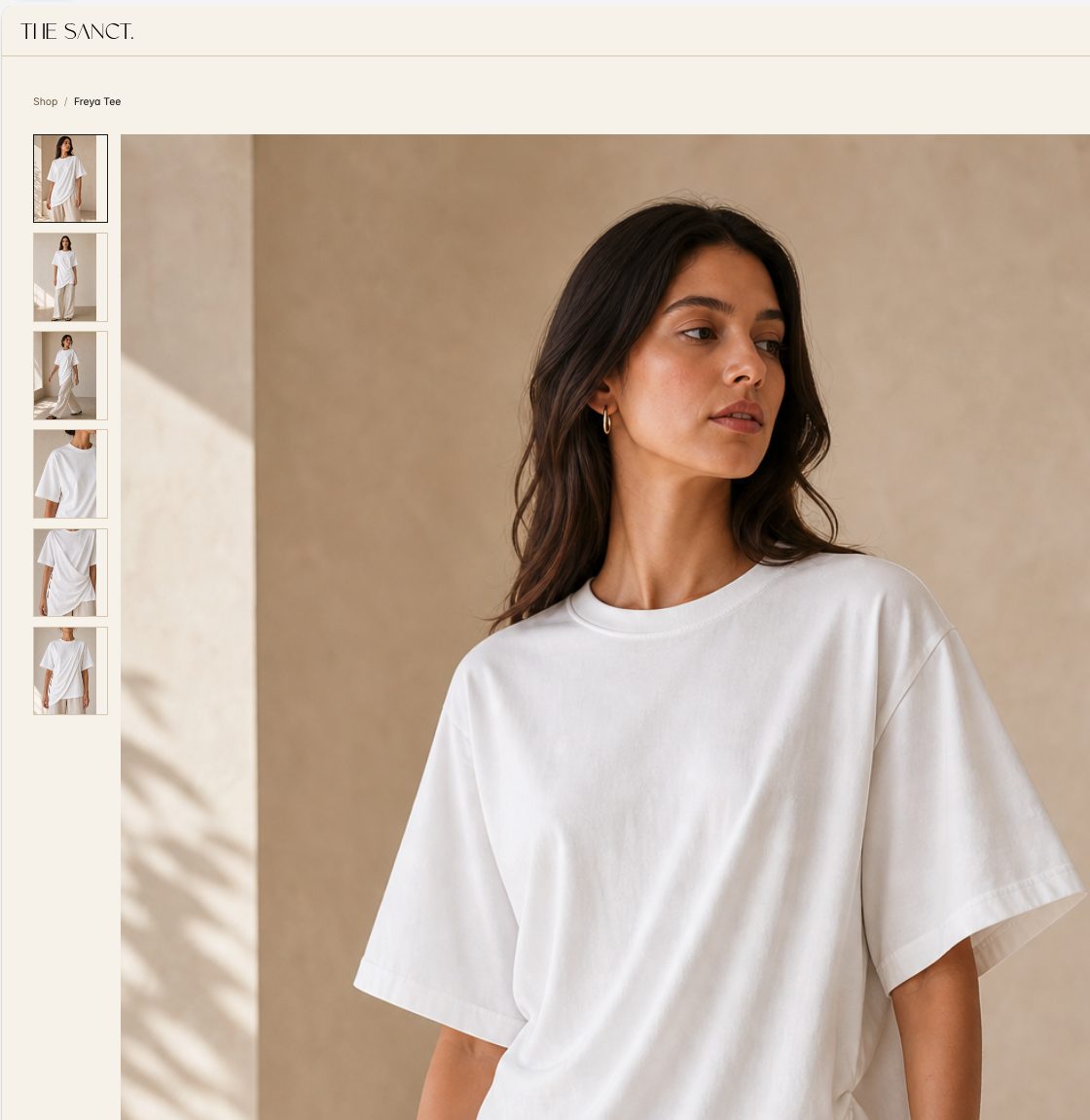
Product proof will eventually need to answer the hesitation points that matter: side view, back view, opacity, movement, drape, fabric behaviour, and construction.
Until final product photography exists, the campaign can sell the standard without pretending proof has arrived.
09 / The creative filter
Every image, ad, page section, and product proof layer should be held against that question. If the creative asks her to become the model to belong, it fails. If it turns the garment into a basic, it fails. If it makes her body the brief, it fails.
The woman is already the point. The garment is the argument.
10 / The world
The world should feel like a private threshold into a clothing language. It needs warmth without becoming soft-focus, colour without becoming decorative, architecture without becoming location tourism.
The goal is a world with gravity: a place where fashion appetite and garment responsibility can sit together.
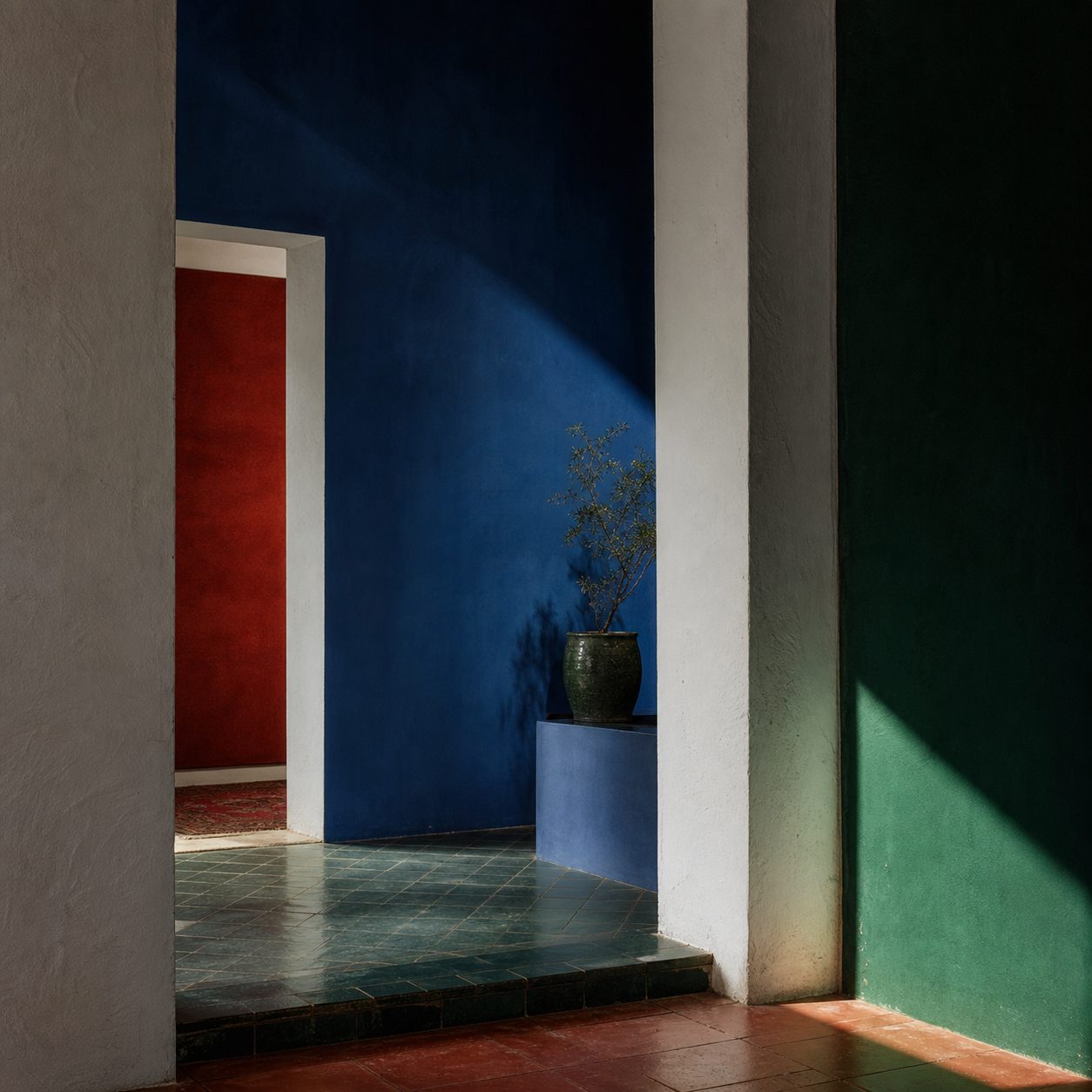
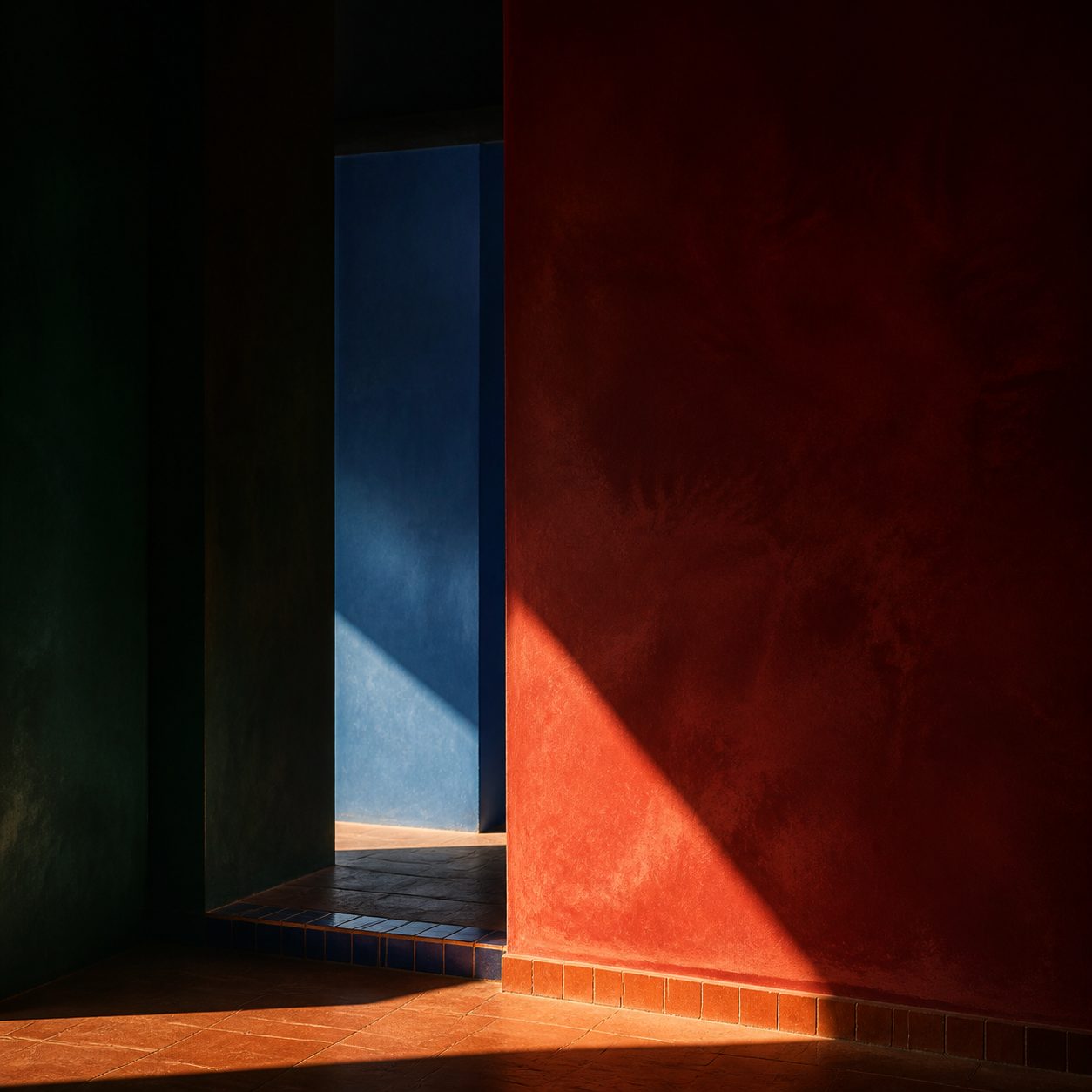
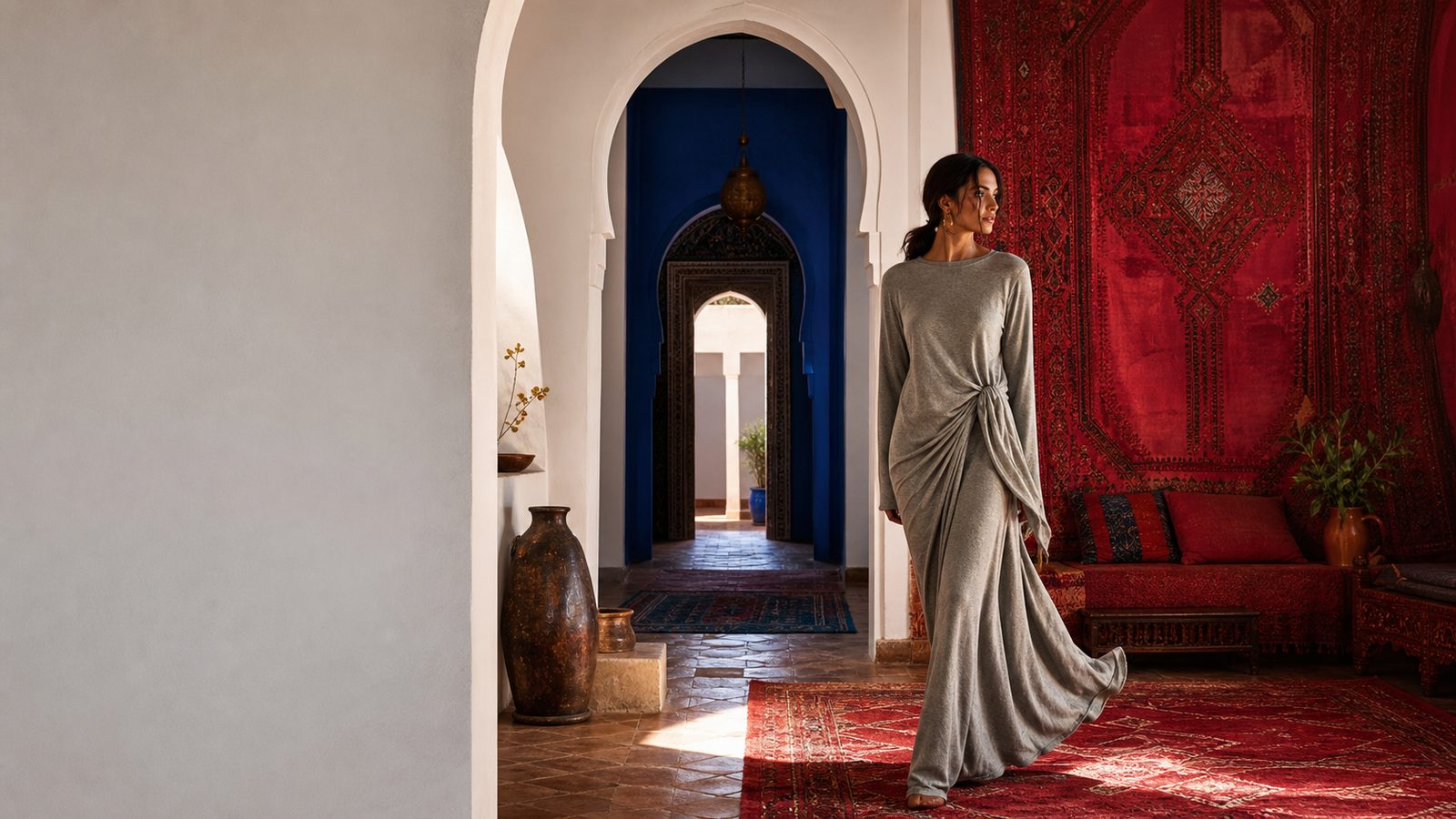
Architecture, inner-room feeling, and colour depth.

Warm, directional, alive, not beige-first.

Still direction for warmth, motion, and threshold energy.
11 / Two visual lanes
The campaign can move before final product photography, but it needs clean lanes. One lane proves the garment when proof exists. The other builds desire, recognition, and brand world now.
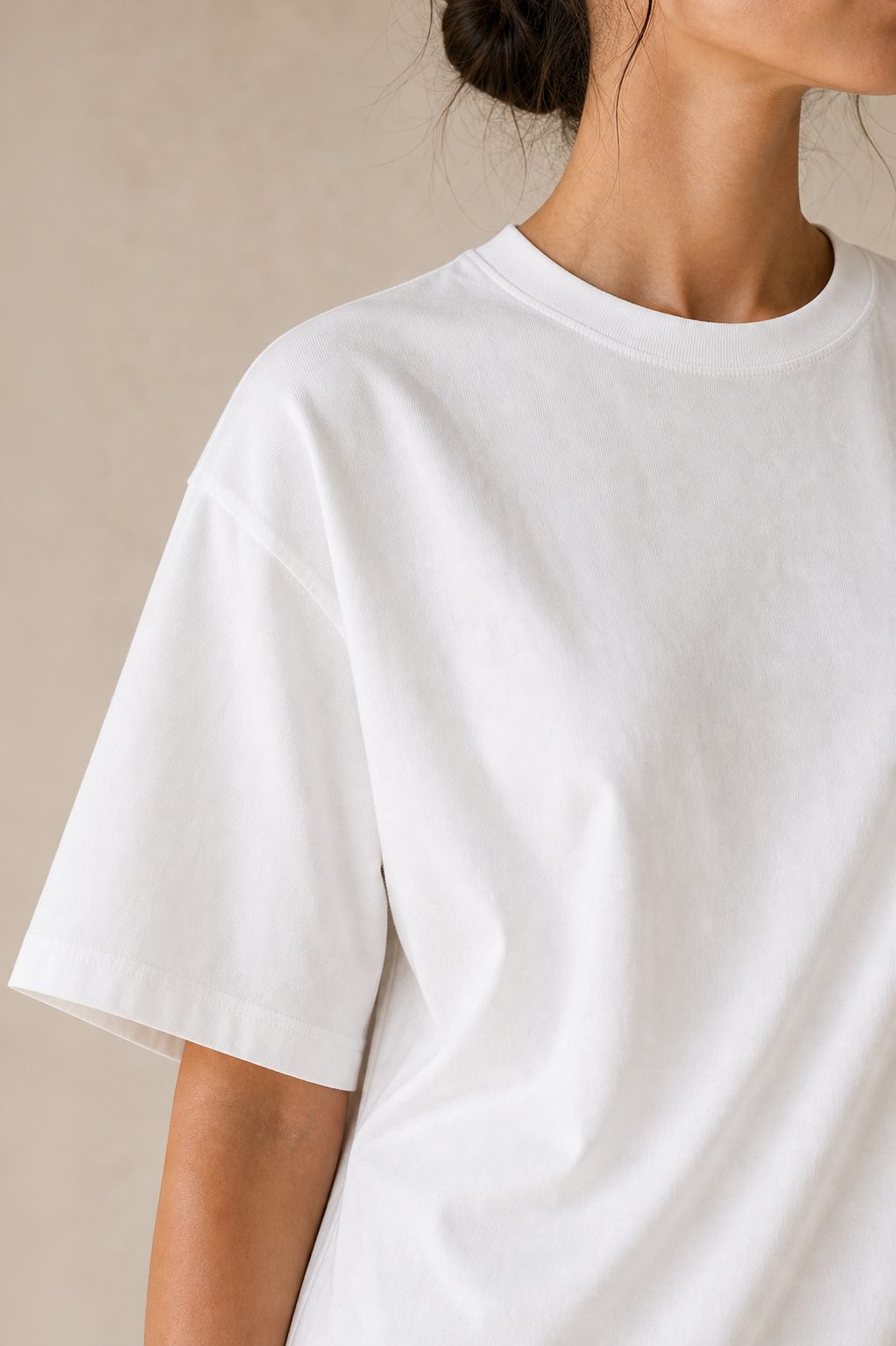
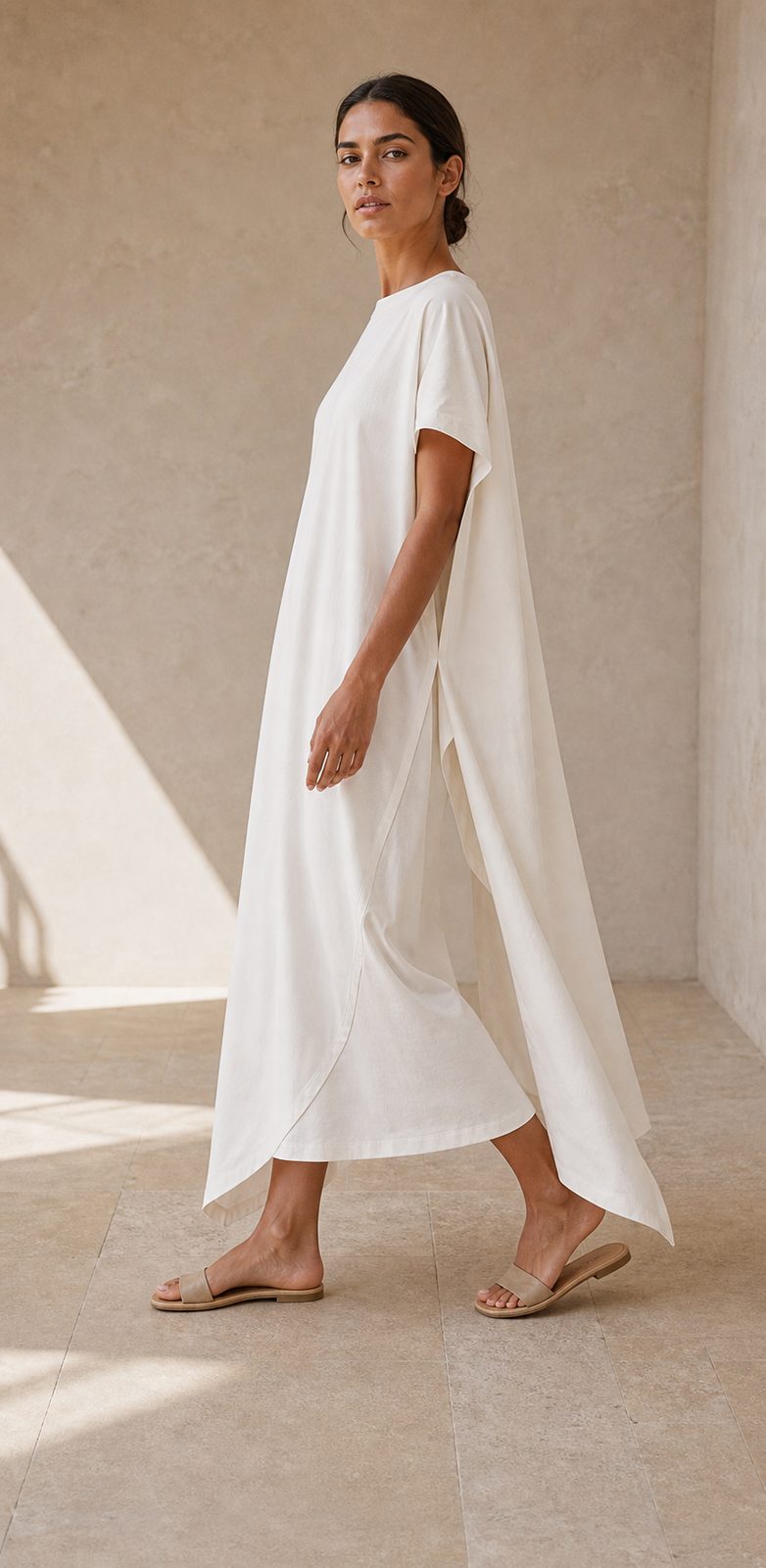
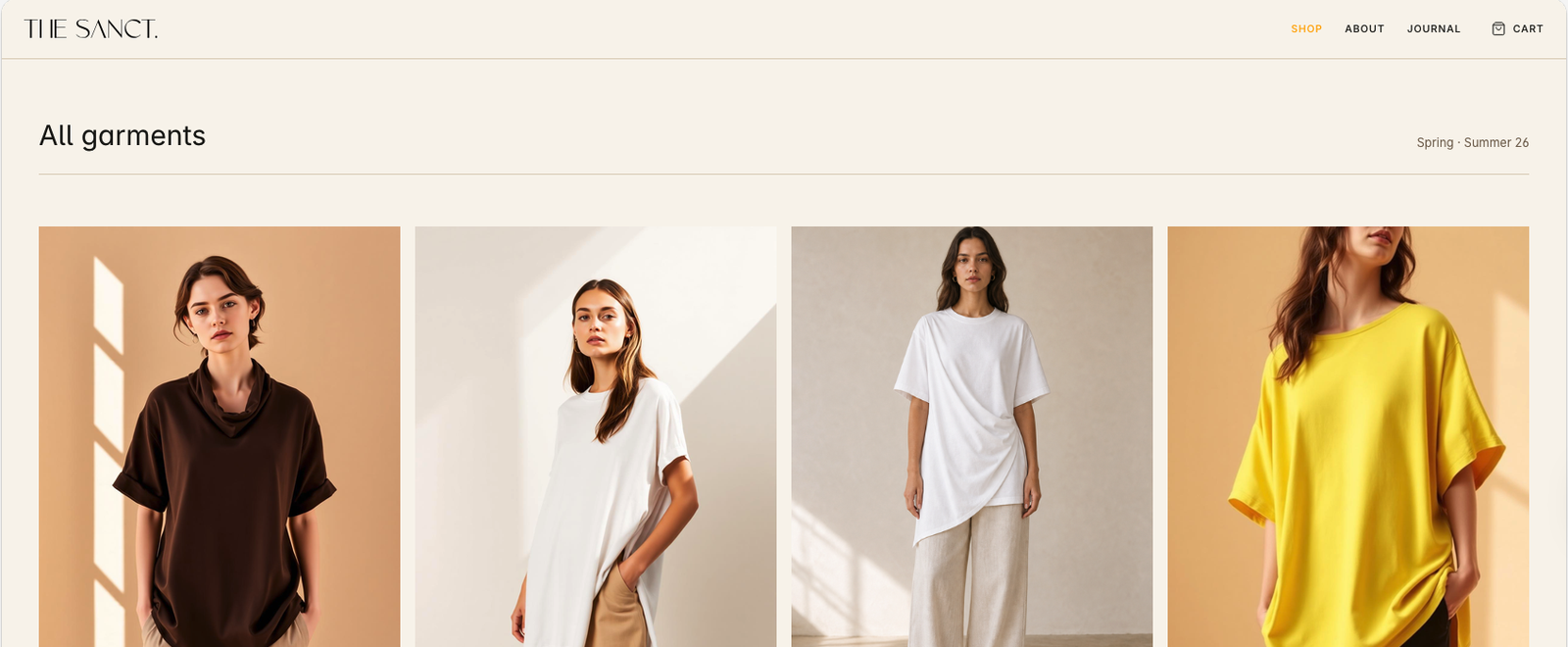
Warm studio, intimate framing, visible side/back/detail, honest construction, movement, opacity, fabric weight. This lane waits for real proof when proof is required.
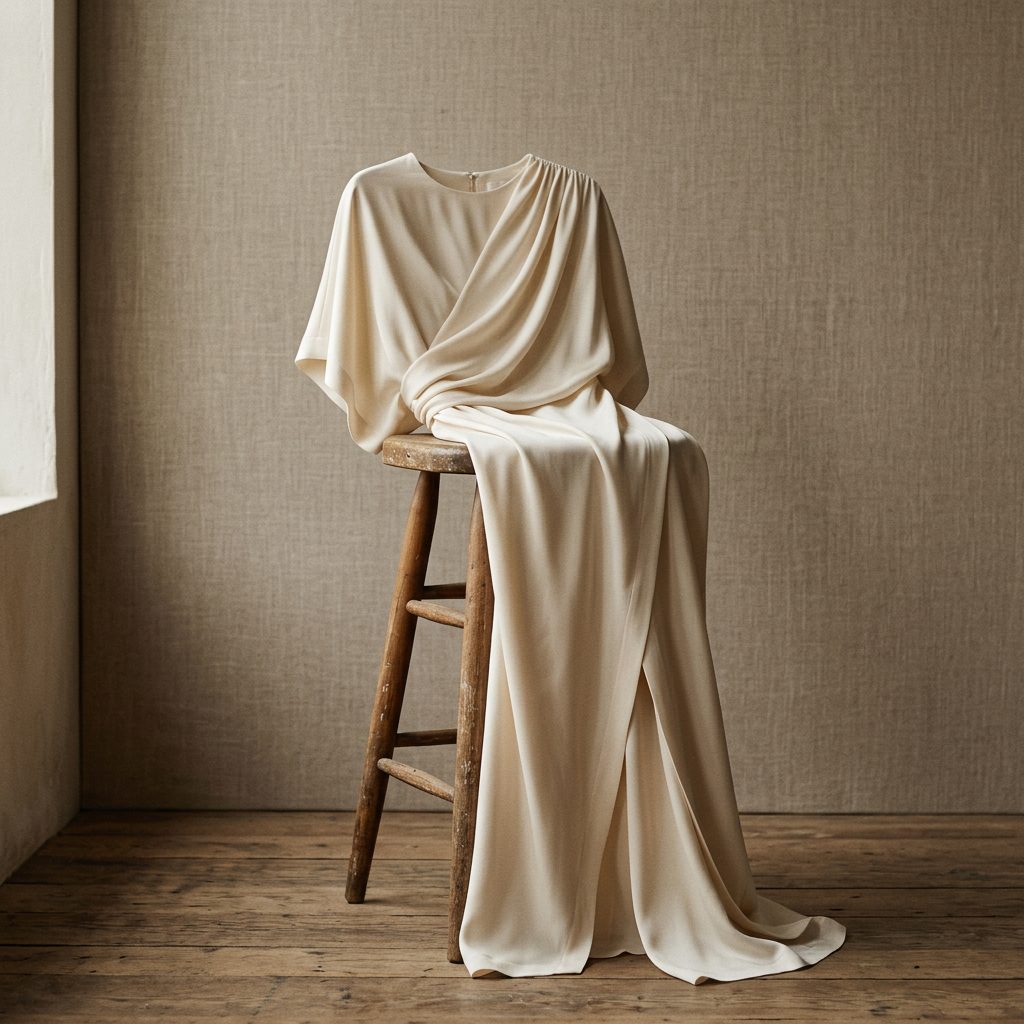
Architecture, colour, warmth, material atmosphere, threshold, and presence. This lane can build recognition before product proof, as long as it stays clearly labelled.
12 / What exists already
The asset base is not pretending to be finished product proof. Its job is better suited to this moment: it gives a visual world, customer language, product direction, and a testing surface for Meta and eCommerce strategy.
Warm architectural direction, threshold compositions, colour fields, and inner-room atmosphere.
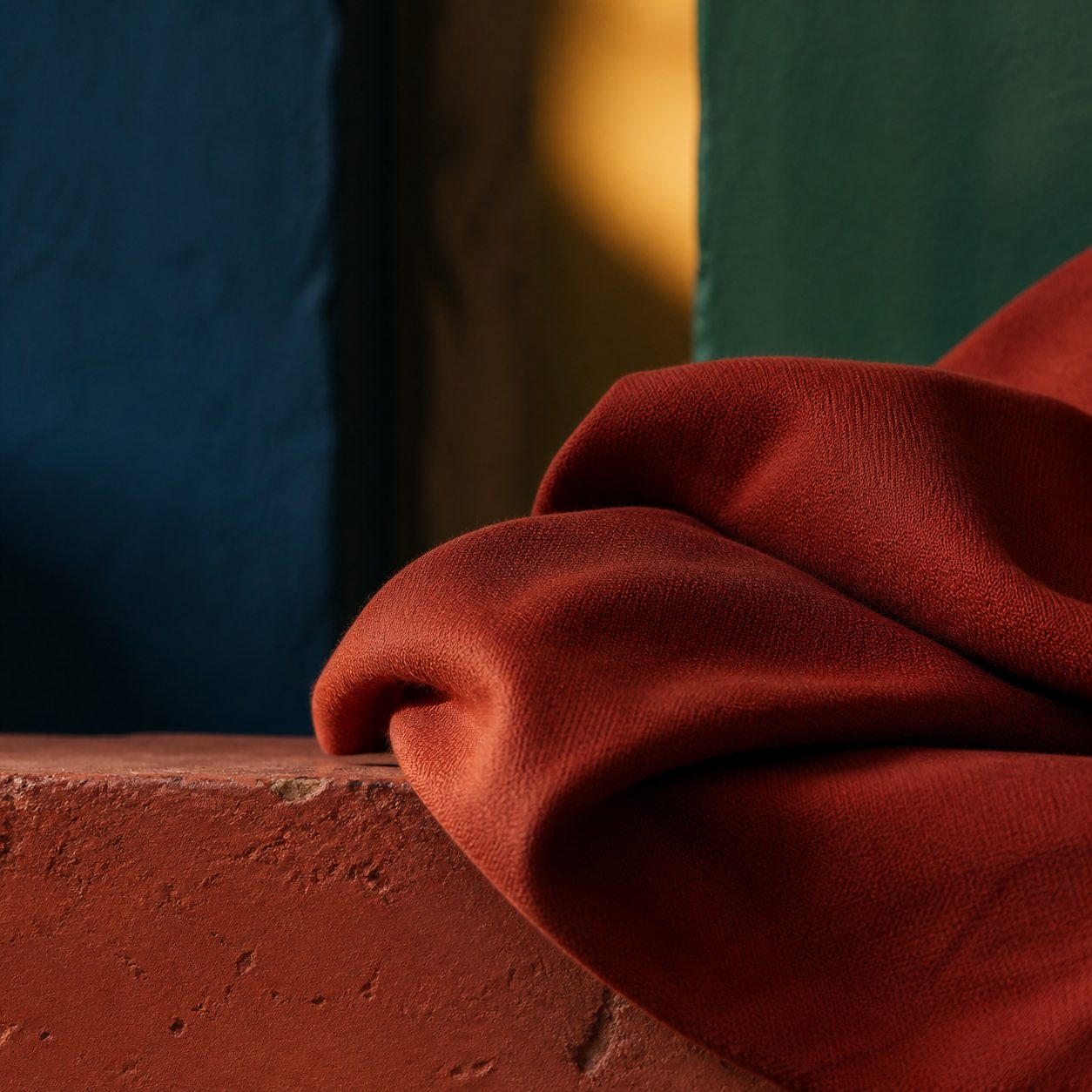
Cotton jersey crops, folds, shadows, texture, and colour-led fabric desire.
Drape, side release, garment behaviour, and construction references for future proof planning.
Customer profile, practical creative filter, visual lanes, ad territories, and proof boundaries.



13 / What these assets can do now
Before product photography, the useful question is not “can we sell the garment?” It is “which part of the standard does the right woman recognize first?”
14 / Asset boundaries
The proposal should be explicit: these assets are useful as world, mood, copy, and product-standard tests. They are not finished product evidence and should not be framed as manufactured-garment proof.
Synthetic, motion, or mood visuals must not imply final garment photography.
The value is the direction, judgement, and testing surface, not pretending the final shoot has happened.
The next ask is a strategic read, not purchase pressure or operational access.
15 / Campaign territories
Each territory should connect customer tension to creative test. The page should make the commercial angles visible without deciding the whole campaign too early.
Customer tension: she wants the garment to give her room inside herself.
Customer tension: she refuses the idea that ease means visual retreat.
Customer tension: the garment has to carry more of the work.
Customer tension: her wardrobe is harder to impress now.
Customer tension: she wants ease without disappearance.
Customer tension: she wants entry into a world, not another generic product drop.
16 / Meta testing hypotheses
The strongest Meta system should not start with random ad variants. It should start with hypotheses that separate story, world, product standard, and customer language.
Does she respond first to “she still wants fashion,” “the woman was never the problem,” or “the garment has to earn the hanger”?
Does recognition come from architectural world, material close-up, product-standard detail, or model/world direction?
Does the strongest next step come after customer tension, product standard, visual world, or campaign mystery?
17 / Flash ad tasters
The purpose is to show how the brand can start becoming Meta creative before final product photography. Each taster maps to a campaign territory and a learning question.

Tests world recognition and threshold language.

Tests fashion appetite without a rescue frame.

Tests differentiation from category sameness.

Tests material desire and product-standard language.
Tests selectivity, standards, and investment logic without numbers.
Tests whether product accountability creates desire.
Tests the balance of ease and fashion signal.

Tests controlled invitation and early mystery.
Invites a commercial read on sequencing, testing, and asset gaps.
18 / eCommerce path
The eCommerce path should not jump from mood into transaction logic. The stronger journey is world, woman, problem, garment standard, proof boundary, then the next relationship step.
01
Enter the colour, threshold, warmth, and visual memory.
02
Recognize taste, standards, and garment fatigue.
03
Name the work fashion has made her do.
04
Show what the garment will need to prove.
05
Ask for interest and learning, not a finished sales decision.
19 / The open strategic space
The strongest outside contribution is not to invent the brand from scratch. It is to shape what gets tested first, what waits for product proof, what assets must be made next, and how creative learning becomes commercial learning.
20 / Strategy call ask
Where is the strongest first commercial angle? What should be tested before product photography? Which creative territories should wait for garment proof? And what would you build around this if the aim is a serious Meta and eCommerce engine?